Lower Pioneer Valley
Marian, where the river picks the spot
Marian grew up around its sugar mill, and cane still runs the calendar. Acreage has spread along the valley since, so the orders split in two: growers who need farm storage, and people on a few acres who want a lockup or a workshop before they are ready to build a shed.
Mill town, new acreage, crush contractors
On the farms, a container takes parts, tools, chemical and the small machines that do not need the main shed. On the newer acreage blocks it often arrives while the house is still a plan, holds the builder's materials, and stays on as the mower bay or the place the boat gear lives. Crush contractors are the third caller: they want a lock close to the work, sometimes on a mate's farm, sometimes on their own block.
Marian is 4753. Pleystowe, Hampden and Kinchant Dam are 4741. Walkerston, back toward the highway, is 4751. Mirani, further up the valley, is 4754.
Alluvial ground that is lovely until the river rises
The flat country is prime cane because it is well watered, and the same soil goes soft and heavy after a big wet. Low paddocks go under when the Pioneer comes up. That is the first question on every Marian job: how high is the spot, not how close it is to the shed.
Choose the higher ground on the property. Put solid supports under the four corners. Rain from above is what a cargo-worthy box is meant to shrug off. Floodwater does not respect the seals, and an empty unit can float — height is the protection, not a slogan on the door. Access in the dry is usually kind: flat, wide gates, room to turn. Soft headlands, light culverts, and cane closed in on the track are the reasons a day gets moved. We would rather wait than bury a truck.
City trucks, pointed up the valley
Marian rides the same trucks as the Mackay suburbs. They are loaded at The Leap and taken up the valley. If you want to see the unit, that happens there, or by serial photographs, before it heads out.
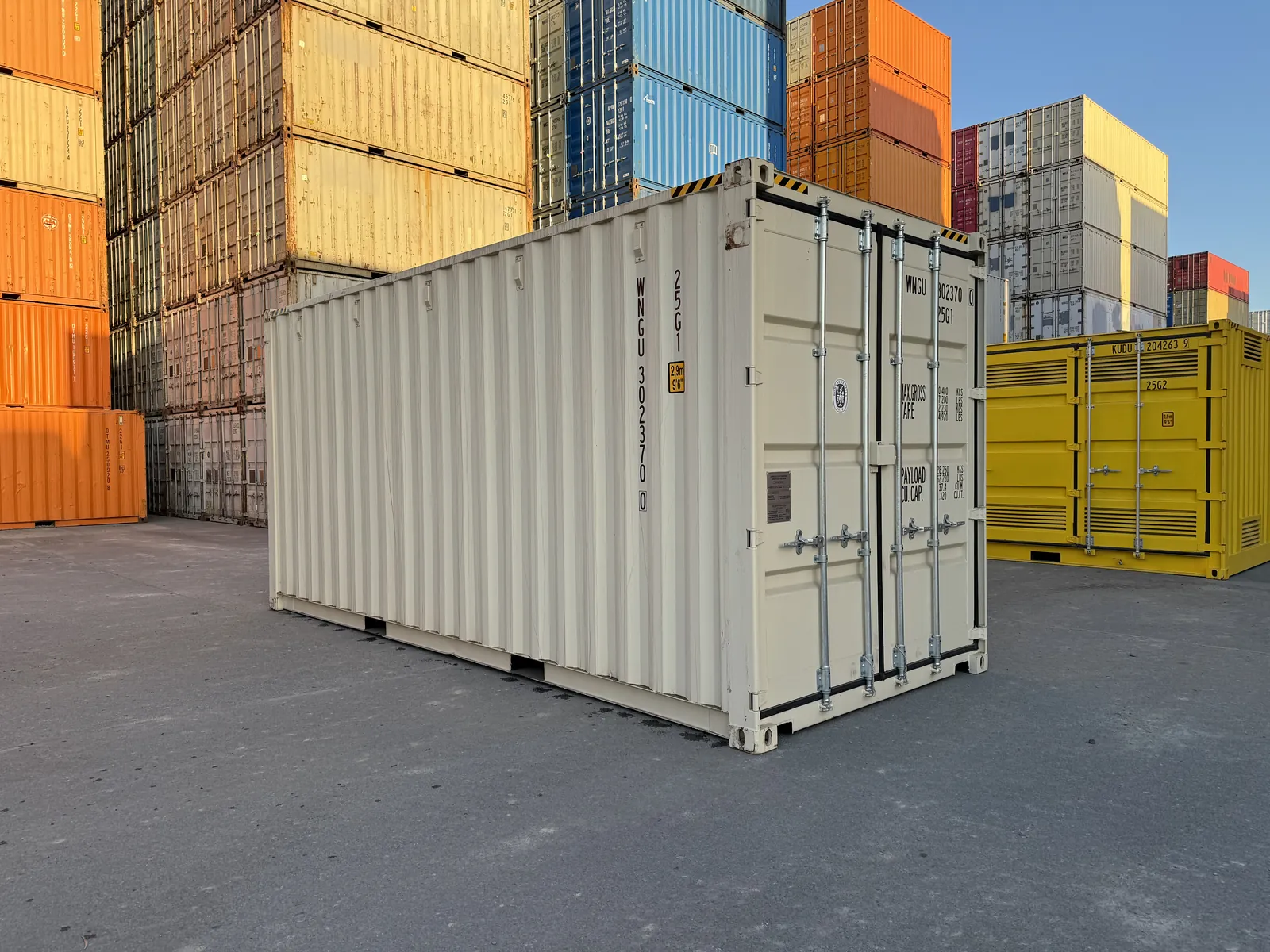
Growers with sidelifter room usually pick a forty-footer for implements. Acreage owners more often stop at a twenty: enough for a ride-on, tools and household overflow, and it comes on a tilt-tray that suits a driveway. Two twenties with a roof between them — lockable ends and a shaded bay in the middle — is a valley habit worth knowing about. Chemicals go in a dangerous-goods unit, not beside the fuel. Owner-builders sometimes hire for the build and later ask about keeping that same unit; that conversation is easier than swapping boxes. Weekly rates and the buy-out sit on the hire page.
Pleystowe has the same floodplain habit as Marian, and a pad that is handy to the tramline is not automatically a pad that stays dry. Around Kinchant Dam the ground can look firm in June and give way by January. If the track crosses a drain, say whether there is a culvert.
Power for a fridge and chargers during a house build is an electrician's work after the box is down. It is not bundled into the delivery. What we can settle on the day is which way the doors face, because turning a container around later means calling the truck back.
Height, headlands, hire-while-you-build
How high should it sit on a floodplain block?
On the highest practical ground, raised on solid pads under the corners. Rain from above and water rising from below are different problems, and only the height deals with the second.
Can I hire one while a house goes up on acreage?
Yes. If you later want to keep that unit, ask about a buy-out so it does not have to be collected and replaced.
Will a truck use a headland near the mill?
Usually while the ground is dry. Soft patches and culverts that were not built for this weight are why the route is checked with the order.